
Certified Garage Door Spring Repair in Bradenton, FL
A snapped spring can trap your car inside or drop the door without warning — and it’s one of the most dangerous DIY repairs a homeowner can attempt. We’re a locally based garage door spring repair team serving Bradenton and Manatee County, replacing torsion and extension springs matched to your door’s exact weight, with same-day service across neighborhoods from Bayshore Gardens to Lakewood Ranch. Unlike a national dispatch line, our techs already know how Bradenton’s salt air and humidity wear down spring coils faster than inland climates — so you get a licensed technician, a written price before we start, and a repair done safely the first time.
100+ ReviewS
Same-Day Service
Locally Owned & Operated
Why Garage Door Springs Fail in Bradenton
Every garage door spring is rated for a set number of open and close cycles, usually around 10,000 according to DASMA, the industry group that sets these standards. In an active Bradenton household, that adds up fast. Two cars, daily trips, and Florida’s year-round warm weather push springs through more cycles than homes in cooler climates.
Heat speeds up metal fatigue in both torsion and extension springs. Salt air near the coast and along the Manatee River adds rust to the mix, weakening coils from the outside in. Humidity does the same to exposed hardware. Add it all up, and Bradenton springs often wear out faster than the national average.
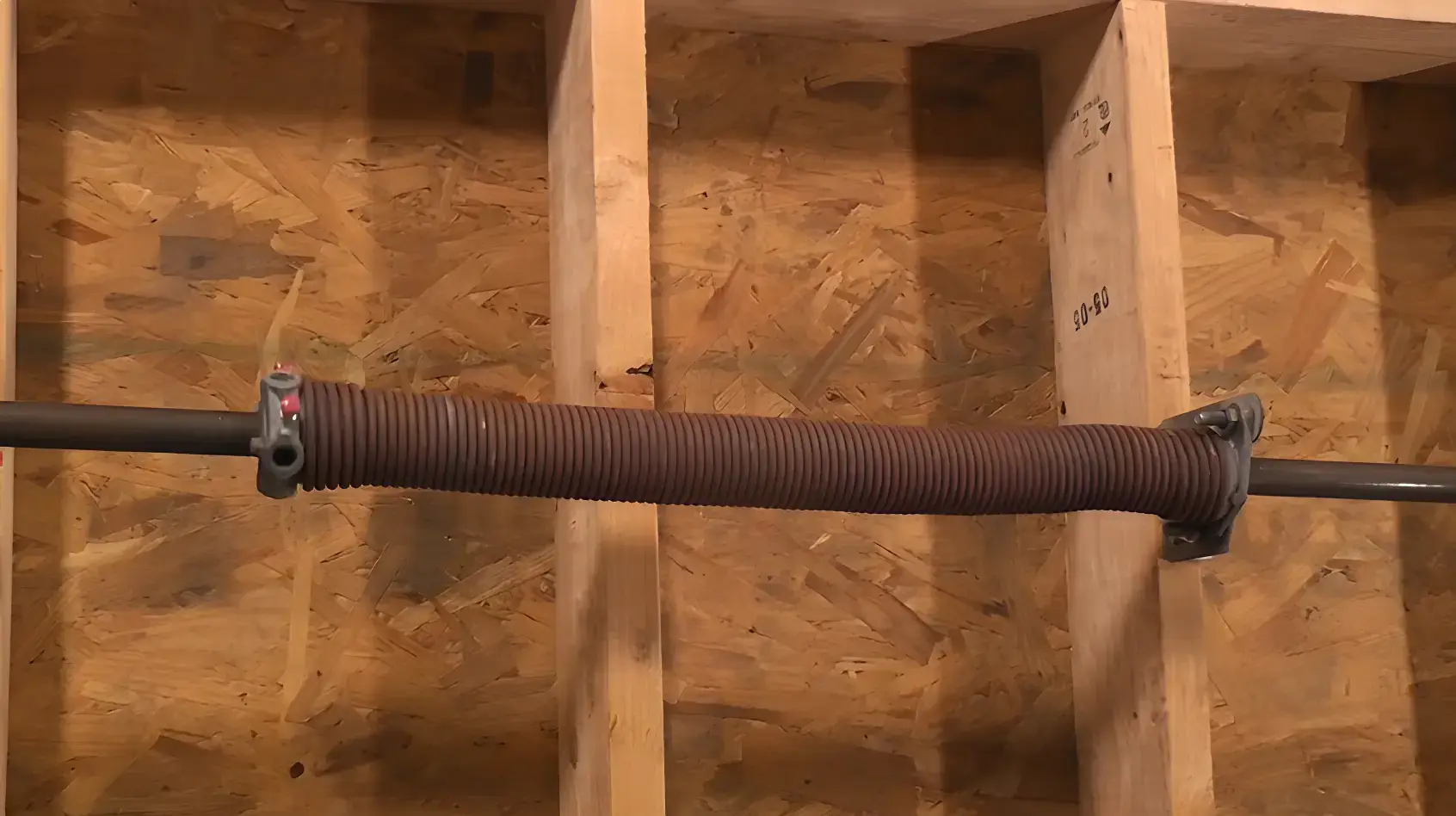
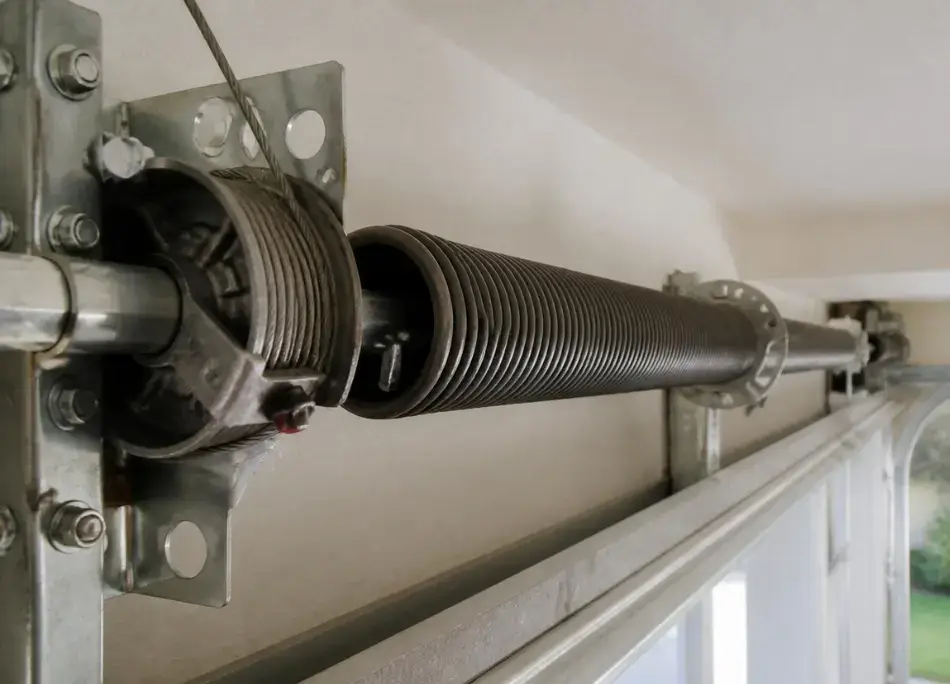
Understanding the Role of Springs in Your Garage Door
carry the full weight of the door, often 150 pounds or more. Without them, the door would be too heavy to lift by hand or by opener.
Torsion and extension springs work by storing energy. That energy counterbalances the door’s weight, so the opener only needs a small motor to do the rest. When a spring wears out or snaps, the whole system feels it. The opener strains harder, cables take on extra stress, and rollers wear faster than they should.
Signs Your Garage Door Spring Needs Repair in Bradenton
Springs fail in predictable ways. Catch the warning signs early and you avoid the worst-case scenario — a door stuck wide open at 10 p.m.
✅ Door won’t open or lifts only a few inches
The opener runs but the door stops almost immediately. This is the most common sign of a broken torsion spring.
✅ Door feels heavy when lifted by hand
A properly balanced door should feel almost weightless. If it feels like you’re lifting the door itself, the spring is gone.
✅ You heard a loud bang from the garage
Homeowners describe it as a gunshot or a car backfiring. That sound is a torsion spring releasing its tension all at once when it snaps.
✅ Door moves unevenly or tilts to one side
One spring may have failed while the other still holds. The door rises crooked and can come off the track.
✅ Visible gap in the spring coil
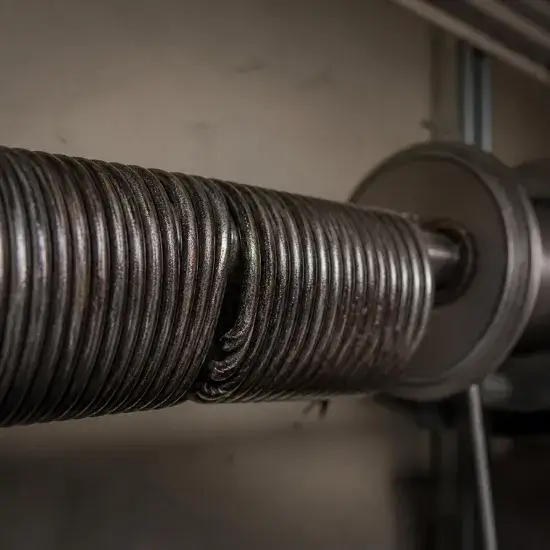
Look at the horizontal spring above the door. A visible separation means it has snapped.
✅ Cables hanging loose or lying on the floor
When a spring goes, cables lose their tension and fall. Do not run the opener if this happens.
✅ Opener strains and makes a grinding sound
Without the spring carrying the load, the opener works far beyond its design limit. Running it this way shortens its life fast.
Types of Garage Door Springs We Repair
Two spring systems exist in residential doors. Each works differently, fails differently, and needs a different fix.
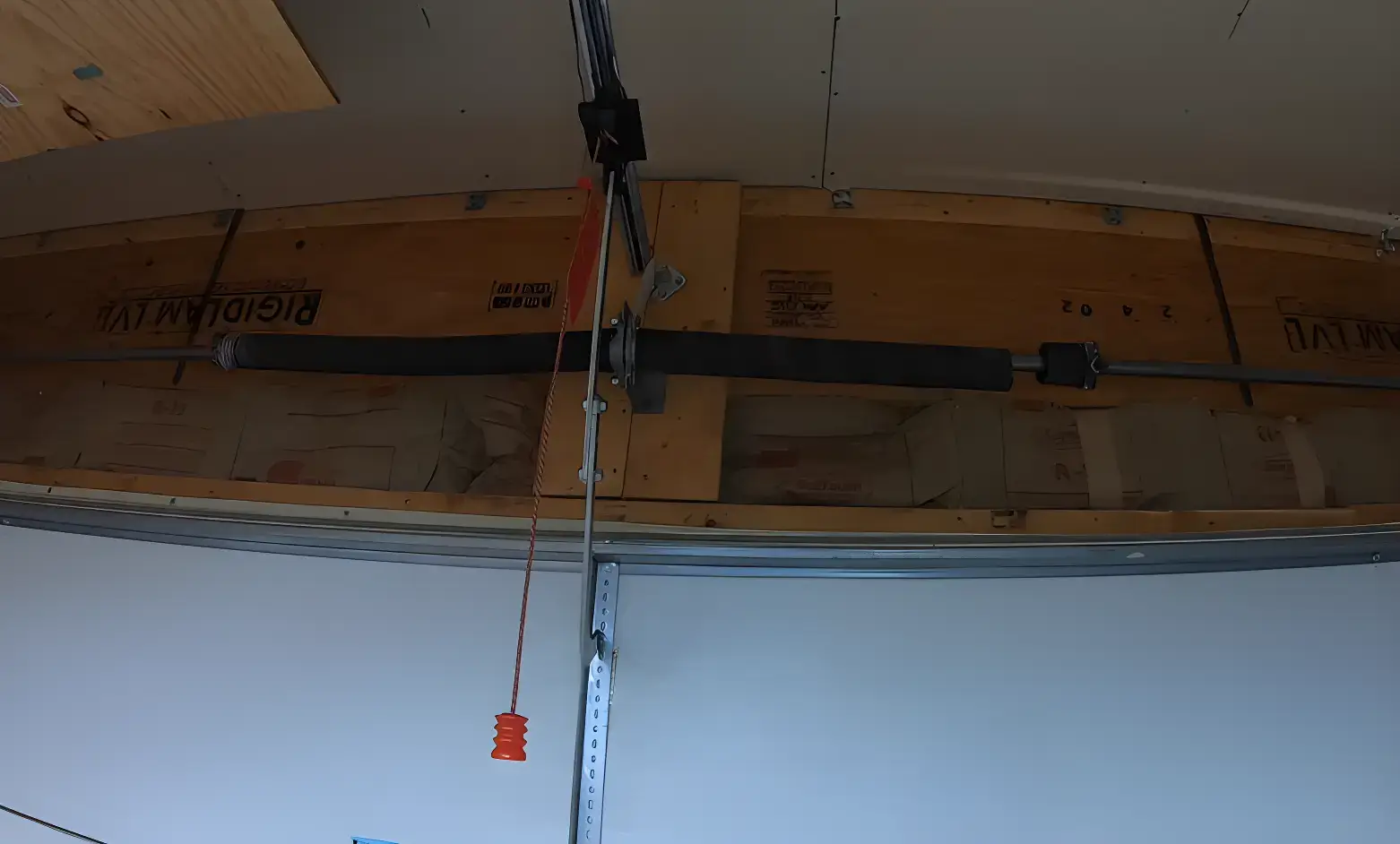
Torsion Spring Repair
Torsion springs sit above the door on a steel shaft. They wind up when the door closes and release to lift it open. Most Bradenton homes built after 1990 use them. Standard units are rated for 10,000 cycles, but Florida’s coastal air shortens that. When one breaks, you hear a loud bang, the door drops, cables go slack, and the opener stops moving it. Do not force it. We match the replacement to your door’s exact weight, wind it to the correct tension, and test the balance before we leave.
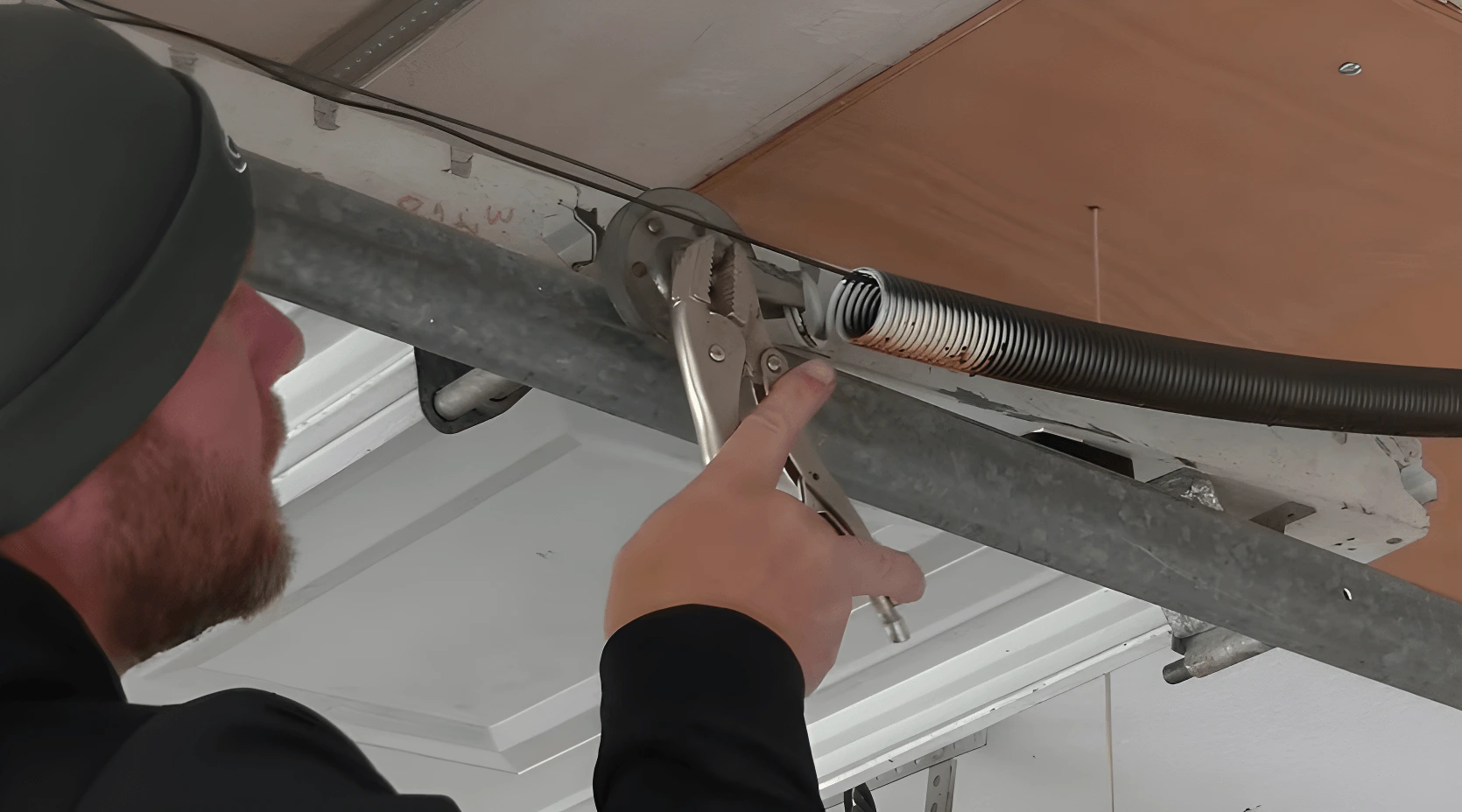
Extension Spring Repair
Extension springs run along the upper tracks on each side. They stretch closed and contract open through a cable and pulley. Older Bradenton homes built before 1990, near 53rd Avenue West and the Village of the Arts, often still have them. When one snaps, that side of the door goes limp, and without a safety cable the broken spring can whip across the garage. We always add safety cables and recommend converting to torsion. It costs more upfront but lasts longer and runs safer.
TorqueMaster Spring Repair
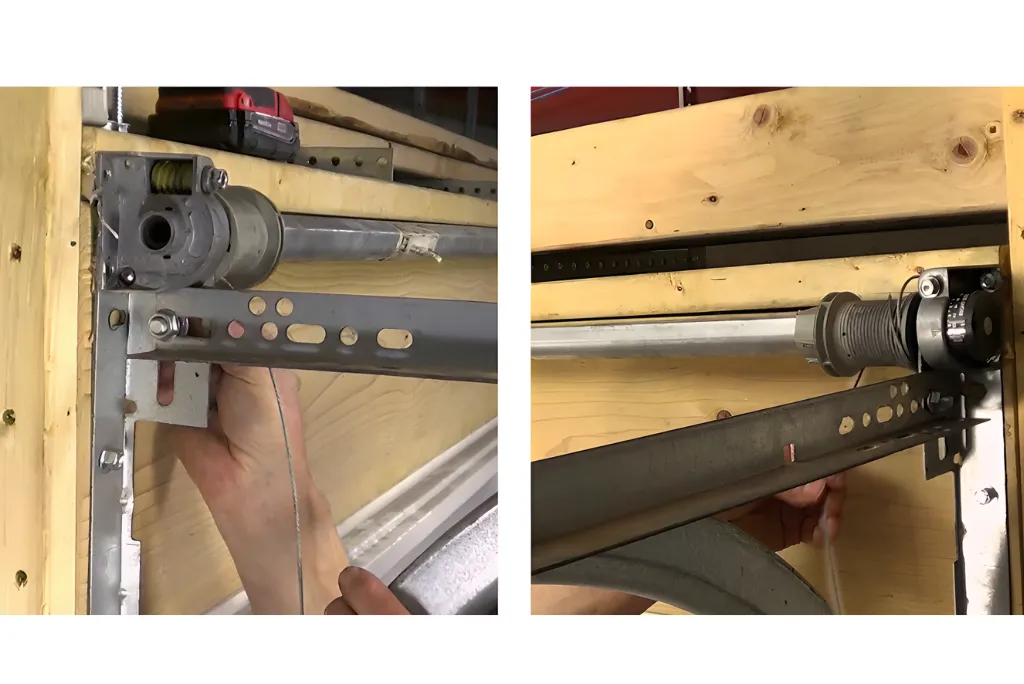
TorqueMaster is Wayne Dalton’s enclosed spring system. The coil sits inside a steel tube so it cannot whip loose when it breaks. Most technicians skip these because they lack the right tools and parts, and many push a full system replacement instead. We stock TorqueMaster components, service them correctly, and never recommend replacement when a repair will do the job.
Why Bradenton Trusts Us for Opener Repair
For garage door spring repair, we’re the trusted choice across Bradenton and Manatee County. Here’s what sets us apart:
Springs are just one part of keeping your door running — see the full range of garage door repair in Bradenton we handle, from cables to openers to full installs.
Common Garage Door Spring Problems We Fix in Bradenton
Springs fail in more ways than a clean snap. Each problem has a cause and a fix.
✅ Spring snapped completely
The coil breaks in two. Age and cycle fatigue are almost always the cause. Replacement is the only option.
✅Spring stretched and lost tension
The coil elongated and can no longer hold the door’s weight. The door feels heavy and the opener struggles. A stretched spring is close to failure.
✅ Spring corroded or rusted
Salt air from Tampa Bay and the Gulf settles on metal coils. Rust increases friction and weakens the steel. Research on coastal systems shows salt air can cut spring lifespan by up to 50 percent. We replace corroded springs with galvanized options for homes near the water.
✅ Uneven tension causing the door to tilt
One spring weakens while the other holds. The door rises crooked. This puts stress on the tracks, rollers, and opener carriage over time.
✅ Spring worn past its safe cycle count
A spring can be dangerous before it breaks. Once past its rated cycles, failure is a matter of time. We flag these during every inspection.
✅ Cable came off the drum
When a spring breaks, the cable loses its guide and spools off. The door jams, falls, or leaves the track. We re-cable and re-tension as part of every spring repair.
✅ Door off track due to spring imbalance
A failing spring causes panels to misalign with the track. Running the opener in this condition bends the track. We fix the spring and realign the track in the same visit.
Why DIY Spring Repair Is Dangerous
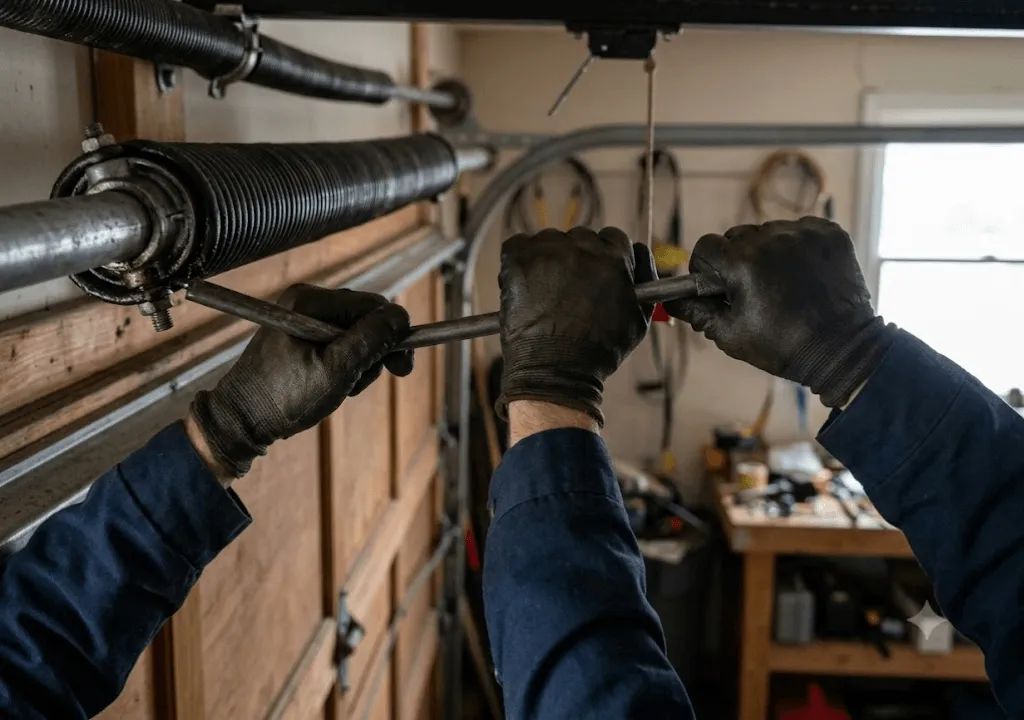
A garage door spring holds enormous tension, enough to lift a door that can weigh over 150 pounds. That energy stays stored in the coil even when the door is closed. If a spring releases suddenly, it can snap back with enough force to break bones or cause serious injury. Replacing a spring also means adjusting torque with the right tools, not guessing by feel. Get the tension wrong, and the door can bind, drop, or come off its track. This is not a repair to learn on your own garage. We carry the right tools and training to do it safely, every time.
Our Proven Repair Process
Every spring repair follows the same careful steps, so nothing gets missed and your door works safely when we leave.
Inspection
We check the motor, logic board, sensors, gears, and remote to pinpoint the exact cause of the problem. This step prevents guesswork and avoids replacing parts that don’t actually need attention.
Diagnosis
Once we find the issue, we explain it in plain language and give you a straightforward repair option. You will know exactly what failed and why before any work begins on your opener.
Repair or Part Replacement
We repair or replace only the specific component that failed, whether that’s a logic board, drive gear, sensor, or remote. Full unit replacement only happens when it genuinely makes more sense.
Testing and Safety Check
We run the opener through several full cycles, testing auto-reverse safety sensors and smooth operation. Your door has to pass every check before we consider the repair complete and leave your home.
What Garage Door Spring Repair Costs in Bradenton
Spring repair costs depend on the type of spring and how many need replacing. Here’s a straightforward breakdown.
A single torsion spring typically runs $150 to $300. Extension springs run slightly less, usually $130 to $250. Since springs wear evenly, we often recommend replacing both at the same time, which brings the total closer to $250 to $500 for most standard doors.
High-cycle springs cost a bit more upfront but last up to five times longer than standard parts, which means fewer repairs down the road. We give you a firm, written price after inspecting your door, so you know the full cost before we start.
What are Benefits of Garage Door Spring Repair
A working spring does more than open your door. It protects the rest of your garage door system and keeps your home secure.
Garage Door Spring Snapped? Here Is What to Do Right Now
If your spring just broke, here is the right sequence of steps:
Stop using the opener immediately. Running the opener on a broken spring forces the motor to lift the full weight of the door. LiftMaster and Genie openers are not designed for this. Running it for more than a few seconds can burn out the motor.
Do not try to lift the door manually with force. A heavy garage door without spring tension can weigh 150 to 300 pounds. Pulling it up strains the opener carriage, bends the track, and puts you at serious risk if the door slips.
Check the cables before you touch anything else. If the cables have come off the drums, leave the door where it is and call us. A cable under tension can snap back and cause injury.
If the door is stuck open, treat it as a security issue. An open garage door gives direct access to your home, your car, and anything stored in the garage. If you cannot close it, stay nearby or secure the interior door until we arrive.
Call for same-day service. Most spring failures in Bradenton are same-day repairs. We carry standard springs on the truck and can usually complete the job in under two hours.
A broken spring is not a wait-and-see situation. The longer the door sits open or stuck, the higher the risk to your home and to the opener system taking on load it should not carry.
Spring Repair vs Spring Replacement — Which Do You Need?
Not every spring problem requires full replacement. Here is how to tell the difference.
|
Situation |
Recommendation |
|---|---|
|
Spring snapped completely |
Replace — no repair is possible |
|
Spring stretched and lost tension |
Adjust first; replace if coils are deformed |
|
Spring is corroded or rusted |
Replace with galvanized option |
|
Door feels heavy but spring is intact |
Adjust tension, inspect for cycle wear |
|
One spring broke, the other is intact |
Replace both — they are the same age |
|
Spring is older than eight years |
Replace proactively at next service visit |
|
Repeated failures on the same spring |
Upgrade to high-cycle spring |
|
Door balance is slightly off |
Tension adjustment may resolve it |
We tell you honestly which one applies after we look at your system. We do not recommend replacement when an adjustment will do. We do not recommend an adjustment when the spring is past its safe service life.
Got Questions?
We’re happy to help. If you can’t find the info you’re looking for, please don’t hesitate to reach out to us!
Need garage door spring repair near you in Bradenton?
We’ve been locally based and hurricane-season tested since 2017, licensed and insured, and ready with same-day spring repair across every Bradenton neighborhood.
We stand behind our work: 1-Year Labor Warranty — if the same spring issue comes back on a repair we completed, we fix it again at no charge. No fine print, no exceptions.