
Why Bradenton Homes Near the Coast Need Different Garage Door Hardware
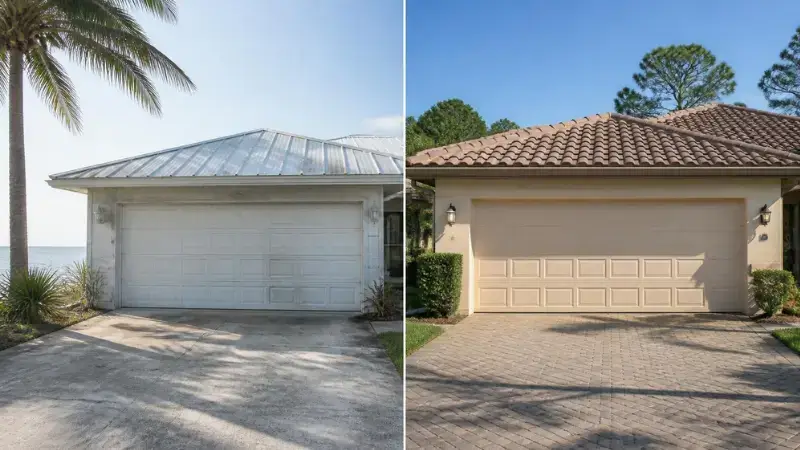
A garage door in Lakewood Ranch and near Warner’s Bayou face very different conditions. They might look the same. The hardware behind them often is not built to last the same way.
Most homeowners never think about this until something starts to fail. A hinge seizes up. A roller starts squealing. A track bracket loosens for no clear reason. In many cases, the real cause is not age. It is the wrong hardware for a coastal climate.
This guide breaks down which parts matter most, why coastal exposure changes the equation, and how to know if your current hardware is holding up.
Not All Garage Door Hardware Is Built for Coastal Florida
Garage doors sold across the country are often built to one general standard. That standard assumes average humidity and no salt exposure. Bradenton does not fit that assumption, especially the closer you get to the water.
Homes near Palma Sola, along Riverview Boulevard, or close to Warner’s Bayou deal with salt-laden air almost daily. That air settles on metal surfaces, including hardware most people never think to check. A door that performs fine for years in Lakewood Ranch can wear out much faster just a few miles closer to Tampa Bay.
Choosing the right hardware is not about upgrading for the sake of it. It is about matching the door to the actual environment it lives in.
How Salt Air Attacks Garage Door Hardware Differently Than Regular Humidity
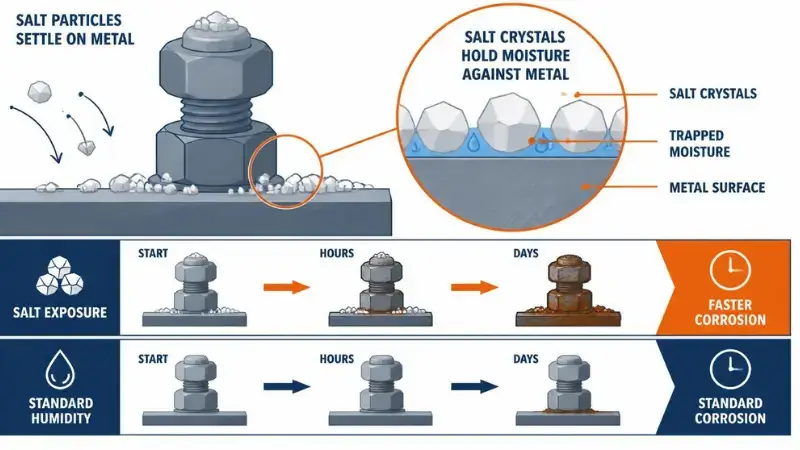
Salt air does not just add moisture. It changes how that moisture behaves on metal.
Salt Air vs. Standard Moisture
Regular humidity causes gradual oxidation over time, the same process we covered in our guide on garage door spring rust from Manatee River humidity. Salt speeds that process up significantly.
Salt particles in the air settle on metal and hold moisture against the surface longer than plain humidity does. This creates a more aggressive, faster-moving form of corrosion, especially on smaller hardware components with less protective coating.
Which Hardware Components Are Most Exposed
Rollers, hinges, fasteners, and even safety sensors sit closest to open air and see the most direct salt exposure. Tracks and brackets, mounted along the garage walls, pick up residue every time the door opens and air moves through the space.
Springs and cables, which we covered separately, are affected too. But hardware exposed to open air often shows wear even earlier, since it has more surface area exposed with less mass to slow the damage.
The Hardware That Matters Most in a Coastal Climate
Some components matter more than others when you are deciding what to upgrade first.
Rollers and Roller Bearings
Rollers move constantly, and any corrosion inside the bearing adds friction fast. A roller that grinds or sticks is often one of the earliest signs of coastal wear, well before other parts show visible damage.
Hinges and Fasteners
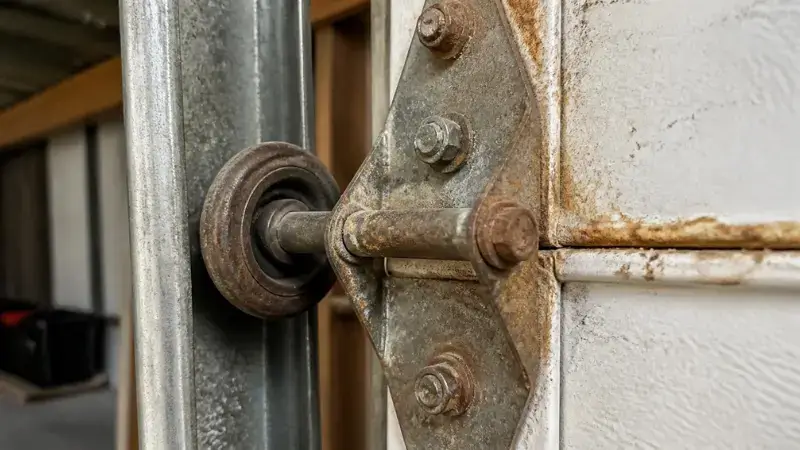
Hinges flex with every open and close cycle. Salt buildup in the joints can cause stiffness or visible rust streaks running down the panel. Fasteners, especially standard steel screws and bolts, are often the weakest link since they are small and easy to overlook. Building code requirements for fasteners near saltwater specifically call for corrosion resistant materials within 3,000 feet of a coastline, which covers much of coastal Bradenton
Tracks and Mounting Brackets
Tracks guide the entire door, and any corrosion here affects smooth operation across the whole system. Mounting brackets hold everything to the wall. If they weaken, the risk goes beyond noise and friction into a real structural concern.
Coated and Corrosion-Resistant Hardware Options
Just like the galvanized springs we covered in our humidity guide, coated hardware exists specifically to slow this process down.
Galvanized rollers, hinges, and brackets carry a zinc coating that acts as a barrier against salt and moisture, and studies on galvanized steel performance in coastal environments confirm this coating can hold up for decades even in harsh marine climates
For homes closer to the coast, spending a bit more on corrosion-resistant hardware usually pays off. It means fewer service calls and a longer working life for the entire door system, not just one part.
How Close to the Water Is Close Enough to Matter?
Distance from the coast makes a real difference, even within Bradenton itself.
Homes near Palma Sola Bay, along Warner’s Bayou, or close to the causeway toward Anna Maria Island sit in the highest exposure zone. Salt air reaches these homes directly and consistently.
Neighborhoods a bit further inland, closer to Manatee Avenue or east toward State Road 70, still deal with humidity and some salt carry, just less aggressively. Homes well inland, like those out toward Lakewood Ranch, see the least exposure and can often use standard hardware longer before needing an upgrade.
If you are unsure where your home falls on that scale, a quick hardware inspection can usually tell you more than distance alone.
Signs Your Current Hardware Isn’t Holding Up to Coastal Conditions
A short walk around your garage can reveal a lot.
- Rust streaks running down from hinges or brackets. This usually means moisture has been sitting there for a while.
- Rollers that squeal or feel rough when the door moves. Often the earliest sign of coastal wear.
- Visible pitting on screws, bolts, or fasteners. Small parts corrode fastest and are easy to miss.
- A track that looks slightly bent or loosely mounted. Bracket corrosion can allow small shifts over time.
- The door feels less smooth than it did a year ago. Gradual changes are easy to dismiss but usually mean something.
If two or more of these sound familiar, it is worth having your hardware checked before small wear turns into a bigger repair.
Upgrading Hardware vs. Replacing the Whole Door
Hardware upgrades make sense when the door panels themselves are still in good shape. Swapping rollers, hinges, and fasteners for corrosion-resistant versions can add years of reliable use without the cost of a full replacement.
Full replacement makes more sense if the door is already older, was covered in our hurricane season guide as a wind rating concern, or shows damage beyond the hardware itself. In that case, pairing a new door with coastal-rated hardware from the start is usually the smarter long-term choice.
For homes ready for that step, our garage door installation and replacement service covers hardware built specifically for this climate.
Frequently Asked Questions
Get Hardware Built for Bradenton’s Coastal Conditions
Standard garage door hardware was never designed with salt air in mind. For homes near Palma Sola, Warner’s Bayou, or anywhere close to Tampa Bay, that gap shows up faster than most people expect.
If your hardware is showing early signs of wear, or you are not sure how your home’s location affects your door, a professional inspection can give you a clear answer. Matching the right hardware to your home’s exposure level is one of the simplest ways to protect your investment for years to come.

