
Why Manatee River Humidity Rusts Garage Door Springs Faster
If you live near the Manatee River, you already know the air feels different here. It clings to your skin in July. It fogs your car windows in January. That same moisture works on your garage door springs every single day, whether you notice it or not.
Homeowners in neighborhoods like the Historic District, Palma Sola, and along Manatee Avenue often call us with the same story. Their garage door started making a grinding noise. Then it got heavy to lift. Then a spring finally gave out. In most cases, rust had been building for months before anyone saw it.
This guide explains why that happens here more than almost anywhere else in Florida, what to look for, and when to call for help before a spring failure turns into a bigger repair.
Bradenton’s Humidity Is Harder on Garage Door Springs Than You Think
Bradenton sits where the Manatee River meets Tampa Bay. That location brings warm, wet air most of the year. Average humidity here often stays above 70 percent, even on dry-looking days.
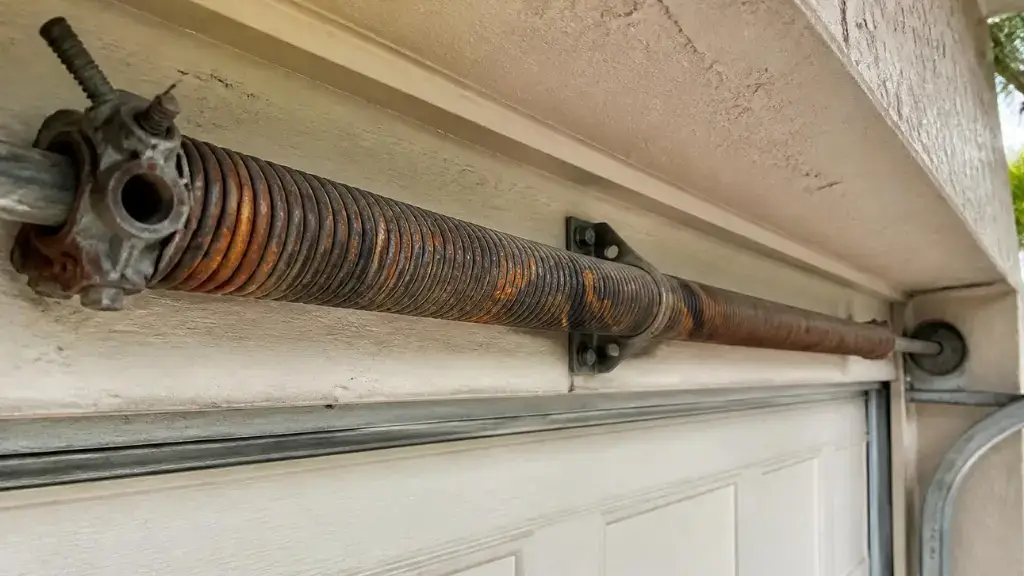
Garage doors face this moisture directly. Most garages are not climate controlled. Warm, humid air moves in and out through the door gap, vents, and even small cracks near the frame. Over time, that moisture settles on any exposed metal, including the torsion spring above your door or the extension springs along the tracks.
Homes closer to the water, like those off Riverview Boulevard or near Warner’s Bayou, tend to see faster wear. Salt in the air adds to the problem. It speeds up corrosion on metal parts that already fight humidity every day.
How Humidity Actually Rusts a Garage Door Spring
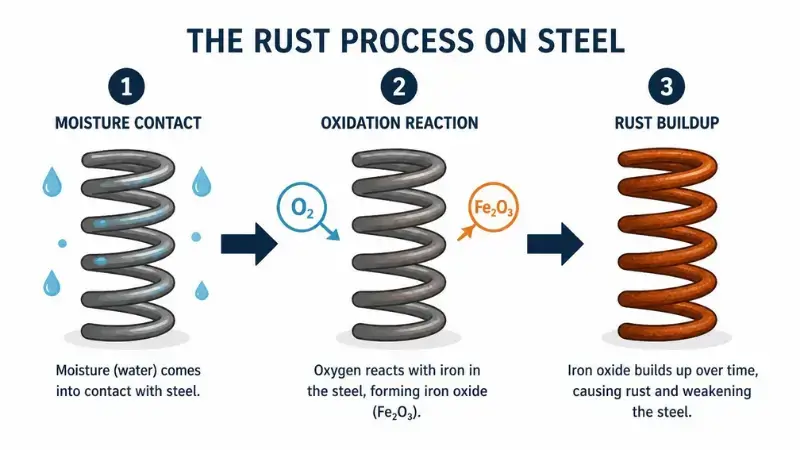
Rust is not random. It follows a simple chemical process, and understanding it helps you catch problems early.
Moisture and Metal: The Basic Process
Garage door springs are made of steel. Steel reacts with oxygen and water to form iron oxide, which you know as rust. The more moisture in the air, the faster this reaction happens.
In a dry climate, this process can take years to show real damage. In Bradenton, where humid air surrounds your garage almost constantly, it moves much faster.
Why Torsion Springs Rust Faster Than You’d Expect in Florida
Torsion springs sit above the garage door and wind tightly under high tension. That tension actually makes rust more dangerous, not just more likely.
As rust builds between the coils, it creates friction points. Those points weaken the metal unevenly. A spring under constant tension with weak spots is far more likely to snap without warning, especially during a temperature swing or a hard freeze-thaw cycle in winter.
5 Early Signs Your Garage Door Spring Is Rusting
Catching rust early can save you from a sudden spring failure. Here is what to watch for.
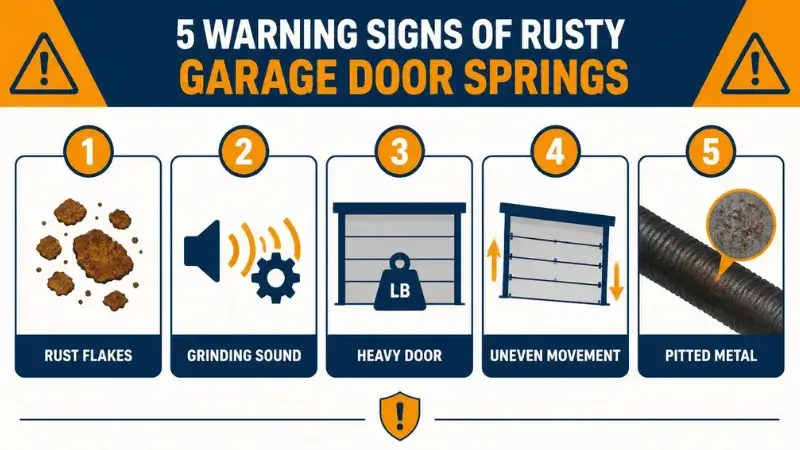
- Orange or reddish flakes near the spring. This is visible surface rust, usually the first sign homeowners notice.
- A squeaking or grinding sound when the door opens. Rust adds friction between coils that were once smooth.
- The door feels heavier to lift by hand. Rust reduces how well the spring holds tension, so it does less work.
- Uneven movement or jerking during operation. This often means one spring is more corroded than the other.
- Visible pitting on the spring surface. Small pits mean rust has already eaten into the metal, not just coated it.
If you notice two or more of these signs, it is worth having the spring inspected soon. Waiting usually leads to full failure rather than a simple fix.
What Happens If a Rusted Spring Goes Unrepaired
A rusted spring does not stay the same. It gets weaker every week it sits untreated, especially through a Florida summer.
Left alone, a rusted spring can snap without warning. This is one of the most common reasons for sudden garage door failures we see across Manatee County. A snapped spring can also cause the door to slam down fast, which creates a real safety risk if anyone is standing nearby.
There is a cost side too. A door running on a weakened spring puts extra strain on the opener motor. That strain can shorten the life of your opener, turning a small spring problem into a bigger repair bill.
Galvanized vs. Standard Springs: Which Holds Up Better in Bradenton?
Not all springs handle humidity the same way. This matters if you are replacing a spring here and want it to actually last.
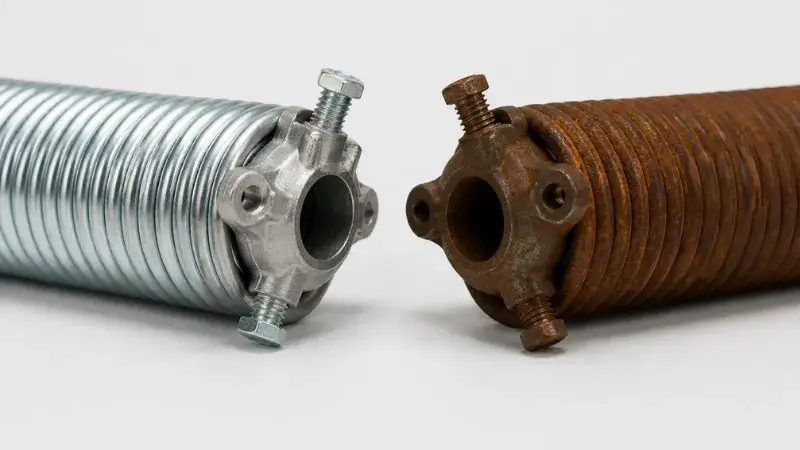
Standard steel springs are common because they cost less upfront. But in a humid coastal climate, they rust faster and often need replacement sooner.
Galvanized springs have a zinc coating that acts as a barrier against moisture. That coating slows down rust formation significantly. For homes near the water or in older neighborhoods with more air exposure, galvanized springs are usually worth the extra cost. They hold up better against the kind of daily humidity Bradenton sees.
How Often Should Bradenton Homeowners Inspect Garage Door Springs?
Because of the local climate, springs here need more frequent checks than in drier parts of the country.
A visual inspection every three months is a good baseline for most homes in Bradenton and Manatee County. If your home sits closer to the river or the bay, such as near Perico Island or Palmetto across the water, checking monthly is safer.
A quick inspection takes only a few minutes. Look at the spring for rust, listen for new sounds when the door opens, and pay attention to how heavy the door feels if you ever lift it manually.
When to Repair vs. Replace a Rusted Spring
Light surface rust with no pitting can sometimes be cleaned and treated, extending the spring’s life a bit longer. This only works if the rust has not eaten into the metal itself.
Once pitting appears, repair is not a safe option. Pitted metal is already weaker in specific spots, and that weakness does not go away with cleaning. At that stage, replacement is the safer and more cost effective choice.
If you are unsure which situation you are in, a quick inspection can settle it. Guessing wrong on a spring under this much tension is not worth the risk.
Frequently Asked Questions
Get Your Springs Inspected Before They Fail
Rust on a garage door spring is easy to miss until the door stops working the way it should. In a city like Bradenton, where humidity from the Manatee River is part of daily life, that timeline moves faster than most homeowners expect. If your door is older overall, it may be worth looking at full installation and replacement rather than repairing one part at a time.
If you have noticed any of the signs above, or it has simply been a while since anyone looked at your springs, a professional inspection is the safest next step. Catching rust early is almost always cheaper and simpler than dealing with a spring that has already failed.

